
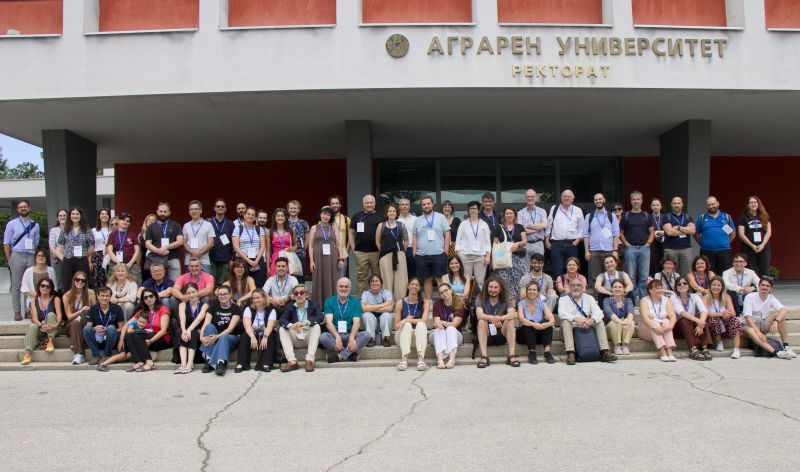
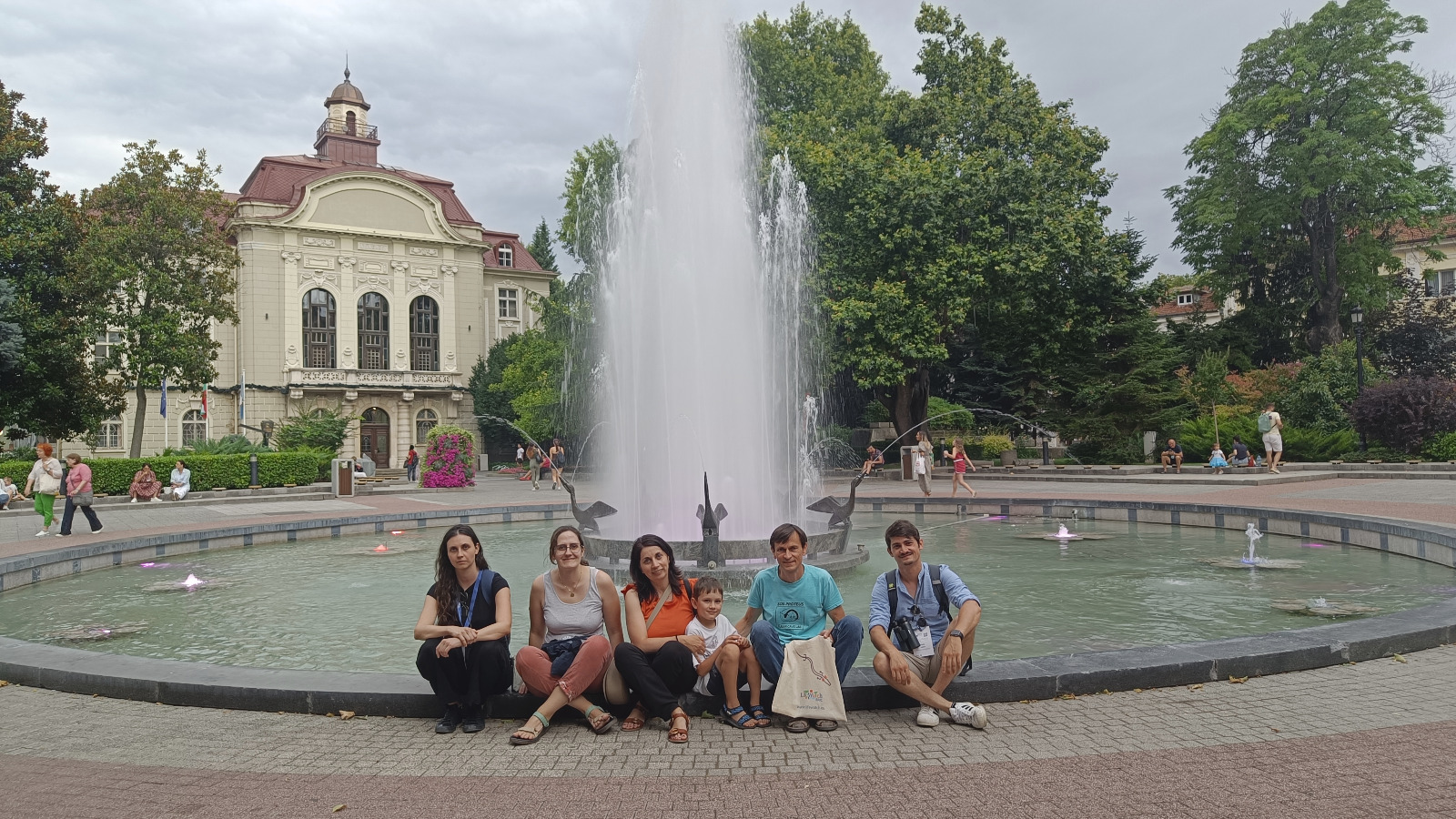
Plovdiv, Bulgaria | July 7–10, 2026 — Five researchers representing five partner institutions represented LifeWatch Slovenia at the LifeWatch ERIC Biodiversity and Ecosystem eScience Conference (BEeS 2026) in Plovdiv, Bulgaria. The team presented pioneering research spanning subterranean climate vulnerability, citizen science monitoring, species habitat mapping, and remote sensing.
Key Contributions & Presentations
Subterranean Biodiversity & Hydrological Dynamics
Dr. Magdalena Năpăruş-Aljančič (Karst Research Institute ZRC SAZU) presented “Is the hidden global distribution of subterranean biodiversity hotspots vulnerable to climate change?” in the session Biodiversity and ecosystem responses to climate change. Her models highlighted where exceptional underground biodiversity faces the highest exposure to future climatic shifts. Additionally, Dr. Năpăruş-Aljančič and colleague Žan Kafol (Karst Research Institute ZRC SAZU) led a LifeWatch ERIC Masterclass introducing FloodWatch, a web application designed to monitor hydrological dynamics in Slovenia’s karst wetlands and streamline complex environmental data exploration.
Habitat Mapping & Olm Conservation
Gregor Aljančič (Tular Cave Laboratory) delivered “Preliminary predictive distribution model for Proteus anguinus across the Dinaric Karst” within the Habitat Mapping session, detailing potential current and future distribution models for the olm (Proteus anguinus).
Acoustics, Monitoring and Citizen Science
In the Biodiversity observatories and environmental monitoring session, researchers from the National Institute of Biology and the University of Ljubljana showcased novel monitoring approaches:
Sara Strah presented “Passive Acoustic Monitoring of Amphibian Biodiversity Using Citizen Science,” drawing on an extensive dataset of more than 2,500 recording hours.
Matic Gabor presented “Towards pheromone-based monitoring of the great capricorn beetle.”
Both Strah and Gabor participated in the conference BioBlitz, where Strah earned second prize.
Forest Hydrological Modelling & Session Leadership
Saša Šercer (Slovenian Forestry Institute) chaired the Biodiversity Observatories & Environmental Monitoring session and presented her research, “Integrating in-situ and remote sensing data for water budget modelling in forested karst ecosystems,” in the Modelling for biodiversity and ecosystems track.
Global Scientific Exchange
BEeS 2026 gathered biodiversity researchers and data modellers from 28 countries, offering an active platform for knowledge exchange, networking, and international collaboration. LifeWatch Slovenia looks forward to building on these connections at future LifeWatch ERIC events.